Can You Trust AI for Research? What Deep Research Changes About Everything
By Thato Brander — Technology Keynote Speaker | September 1, 2025 | 6 min read
WHAT I DISCOVERED USING AI DEEP RESEARCH FOR THE FIRST TIME
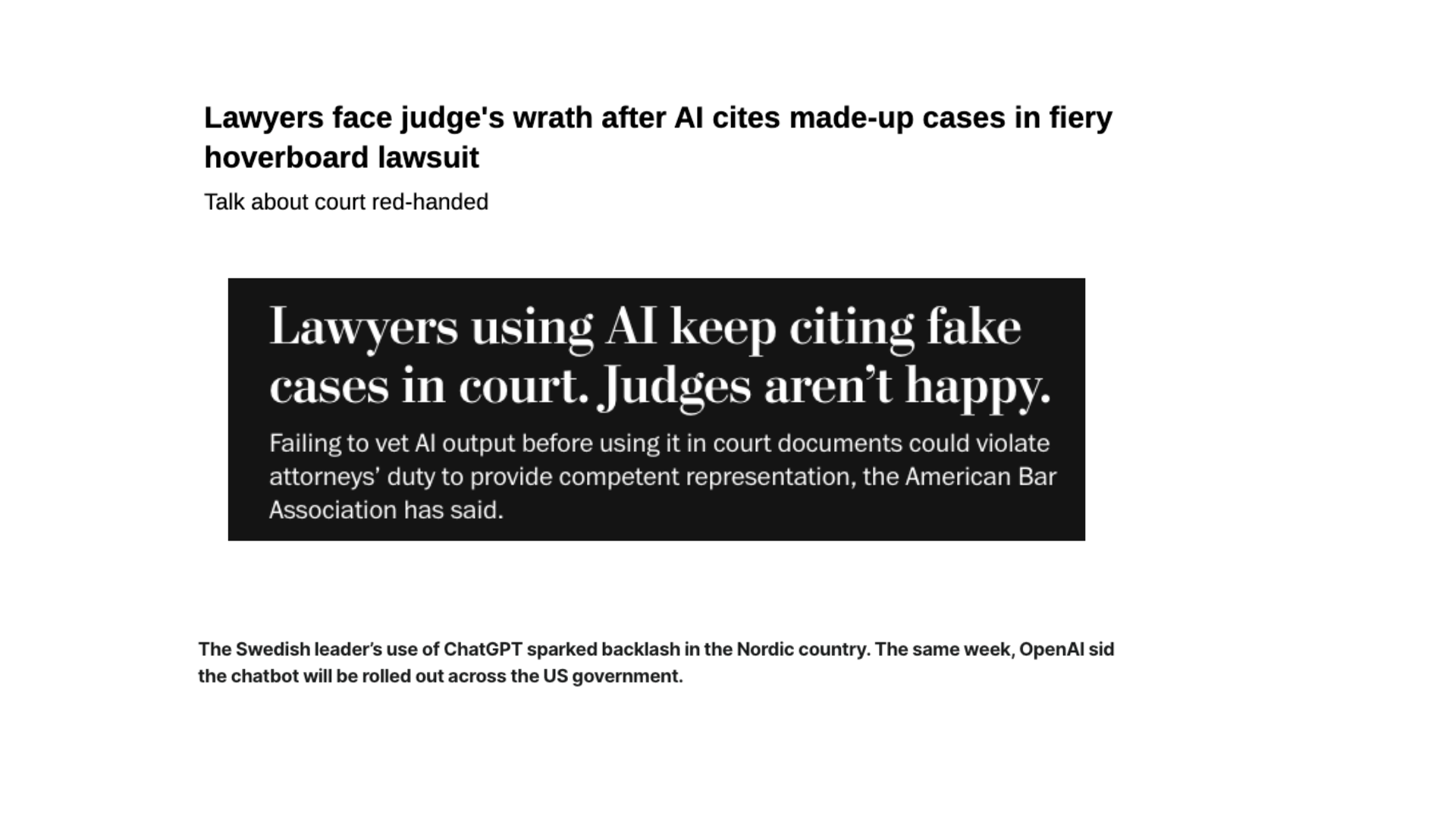
You can give a driver a car, but if they don't know how to drive it, it can only end up in trouble. Most people have access to Generative AI Applications, but they don't know how to use them effectively. That's why alarming headlines about AI misinformation exist. Many people use AI for research, but don't know the right ways to harness it, which can lead them astray. Simply typing something into the normal ChatGPT is not enough; the answers you get might not be true or based on facts.
How do you know if you can trust AI for research? If it's made-up fake information before?
That's where deep research enters the picture. Deep research is not like asking the normal ChatGPT. Stay with me and I'll explain.
When I typed my first prompt into Google Gemini's Deep Research feature, I had no idea what I was about to witness. I was conducting a market analysis, something that would have usually taken me three weeks of scattered Google searches, vendor calls, and industry reports. Twenty minutes later, I was staring at a comprehensive 15-page analysis. But that wasn't the shocking part. The shocking part was that the research had connections that I would have never picked up.
That's when it hit me that this is not just a faster way of doing research, it is a different approach completely.
WHAT IS AI DEEP RESEARCH — AND WHY REGULAR CHATGPT ISN'T ENOUGH FOR SERIOUS WORK
I used to think AI research meant asking ChatGPT a question and getting an answer. That could not be any further from the truth, but why?
Regular ChatGPT draws from its training data — information that's already baked into the system. It can synthesize what it knows, but it can't discover new information or investigate current developments. It's essentially a very smart encyclopedia.
Deep Research is different. It's an AI agent that actively searches the web, reads multiple sources, cross-references information, and builds comprehensive analyses in real-time. Think of it as having a research assistant who never gets tired and can read hundreds of sources simultaneously.
Here's what happens when you submit a Deep Research request: The AI starts by understanding your question and breaking it into research components. Then it begins searching the web systematically. As it finds information, it identifies gaps and pursues new lines of inquiry. It cross-references sources, validates claims, and builds a comprehensive picture of your topic. After 10–30 minutes, it synthesizes everything into a structured report.
This isn't just faster research — it's research that would be impossible for a single human to conduct in any reasonable timeframe.
THE FUNDAMENTAL DIFFERENCE BETWEEN HUMAN AND AI RESEARCH THAT CHANGES EVERYTHING
Traditional research is linear and limited. You search for information, read what you find, take notes, and hope you haven't missed anything important. Your capacity is limited by how much you can process at once.
AI Deep research operates on a completely different principle. It can investigate multiple angles at the same time, while identifying connections across domains that human researchers typically miss.
Consider a simple example: you're researching project management software for your team. A human researcher might compare features and pricing. AI research can simultaneously analyze user reviews across platforms, investigate the financial stability of vendors, check integration capabilities with your existing systems, research the technical background of each company's leadership team, analyze customer support response patterns, and identify emerging competitors you haven't considered.
As the AI discovers information, it adapts its research strategy. If it finds that one vendor has significant security vulnerabilities, it might pivot to investigating cybersecurity features across all options. If it discovers that most customers struggle with implementation, it might focus on deployment complexity and support quality.
This adaptive capability means the research improves in real-time, pursuing leads that emerge during investigation rather than following a predetermined path.
CAN YOU TRUST AI FOR RESEARCH? THE HONEST ANSWER
The trust question is critical, and the answer is more nuanced than most people realize.
AI research tools are good at gathering and synthesizing information from public sources. They can process large amounts of data without fatigue. They cite their sources, allowing you to verify claims independently.
However, they can't access private information, conduct primary research, or interview stakeholders directly. They work with what's publicly available online.
This means AI research is incredibly powerful for understanding market landscapes, comparing vendor options, analyzing trends, and synthesizing complex topics. It's less useful for gathering competitive intelligence about private companies, understanding internal stakeholder perspectives, or accessing information that requires specialised databases.
The key is understanding what AI research can and cannot do, then structuring your requests accordingly. Think of it this way: AI research gives you the comprehensive foundation that would normally take weeks to build manually. You then layer on primary research, stakeholder input, and private data to complete the picture.
HOW ORGANISATIONS ARE USING AI RESEARCH TO BUILD COMPETITIVE ADVANTAGE
Many companies already using AI research strategically are building significant advantages over competitors that are still doing manual research. They're making faster decisions based on more comprehensive analysis.
Start with problems that normally frustrate you. Need to evaluate vendors? Understand a complex market? Research competitors? These are perfect AI research applications.
The most sophisticated organizations are using AI research for complex, multi-disciplinary problems that would normally require teams of experts. Cross-domain problem solving becomes feasible when you need to understand technical specifications, regulatory requirements, market dynamics, and competitive positioning simultaneously.
Expert discovery moves beyond LinkedIn searches to investigate actual work output, community contributions, and peer recognition. Market intelligence combines technical developments, regulatory trends, competitive moves, and customer sentiment into actionable insights.
What separates strategic users from casual users: they're using AI research to investigate problems they couldn't have tackled manually — questions that would have required months of investigation and team coordination.
THE FUTURE OF AI RESEARCH: WHY EARLY ADOPTERS WILL WIN
Current AI research tools work with publicly available information. The next generation will integrate with enterprise systems, conduct structured interviews with stakeholders, perform controlled experiments, and monitor ongoing developments automatically.
This evolution means the competitive advantage gap between AI research adopters and traditional research methods will only widen. Organizations building AI research capabilities now are positioning themselves for exponential improvements as the tools become more sophisticated.
The research revolution isn't coming; it's already here. The question is whether you're going to lead it or spend the next few years trying to catch up.
YOUR FIRST STRATEGIC MOVE: HOW TO START USING AI DEEP RESEARCH TODAY
Pick one decision you're facing right now that requires understanding multiple factors: vendor selection, market expansion, technology adoption, or strategic partnerships.
Instead of starting with manual research, try the flipped interaction pattern. Open a regular ChatGPT conversation and say: "I need to design an AI research project about [your topic]. Instead of me trying to figure out what you need to know, interview me and gather the information needed to create an excellent research task."
Let the AI guide the conversation. It will ask about your context, constraints, and objectives. This guided process often reveals research approaches and information sources you wouldn't have considered. Once you've thoroughly explored your research needs, have the AI create a comprehensive task definition for your Deep Research tool.
The research advantage is real, it's available now, and it's growing every month. The only question is: what are you waiting for?
In Closing
What's the most complex research challenge you're facing right now? Have you considered how AI research might change your approach to solving it?
About the Author
Thato Brander is a technology keynote speaker and writer at the intersection of AI, innovation, and the future of business. Thato helps organisations understand and navigate the impact of emerging technologies from generative AI to deep research tools and translates complex tech trends into clear, actionable insight.